Zombie Defense: War Z Survival
- 4.5
- Rating
- 10.00M
- Installs
- Free
- Price

 Analysis by App-foxy
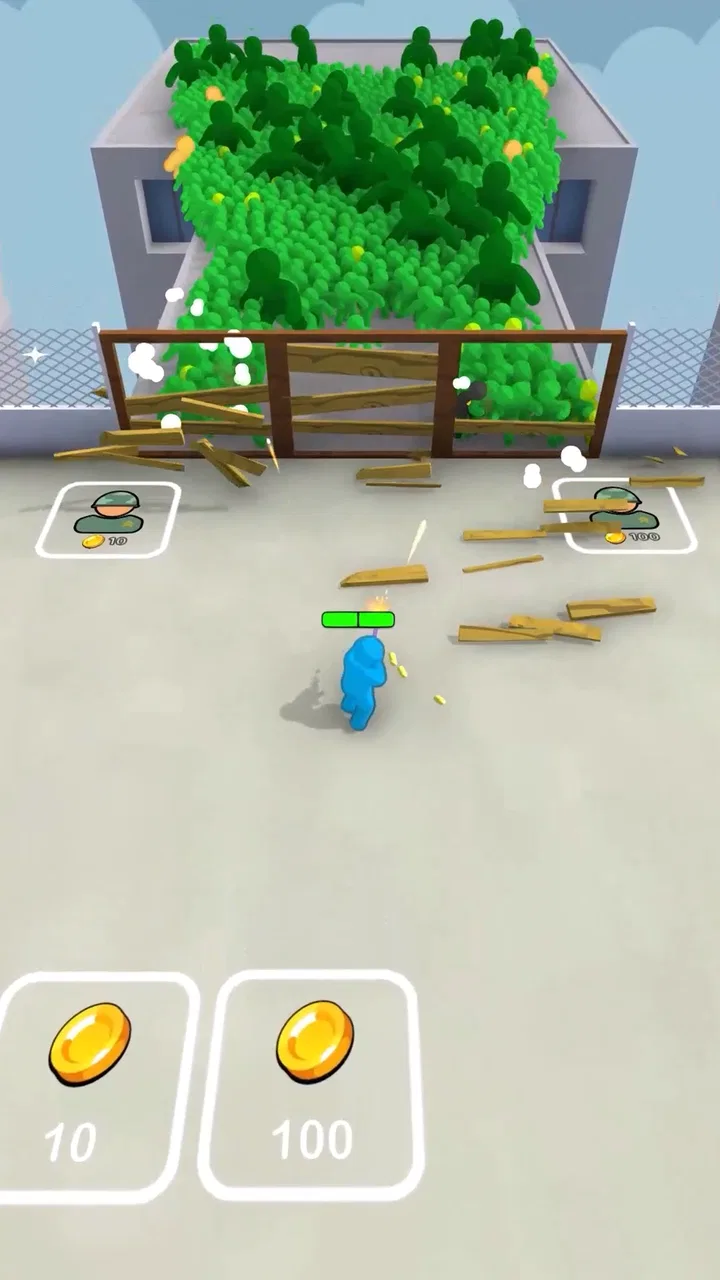
Zombie Defense: War Z Survival is the kind of arcade game I can understand immediately: zombies approach, my home needs protecting, weapons need improving, and every short session asks me to survive a little longer. That simple loop is a big part of its appeal. I do not need to learn a complicated control scheme or spend a long time preparing before playing. I can open it, make a few decisions, and get straight into the action.
After spending time with it, I see a clear difference between its excellent first impression and its ability to remain part of a regular gaming routine. The early hours are easy to enjoy because the objective is obvious and the apocalypse theme gives each round a sense of urgency. Later, the question becomes whether upgrading weapons and repeating defensive encounters still feels rewarding. My answer is generally positive, but with an important condition: this is best approached as a casual arcade game, not as a deep strategy experience.
How the first week feels
The opening experience is built around quick understanding. I never felt lost about what I was supposed to protect or why an upgrade mattered. The game’s central promise is not hidden behind menus or a long tutorial. I defend a home, deal with incoming zombies, and use progress to become better prepared for what comes next. That clarity makes it especially suitable for short breaks, including a commute, a waiting room, or a few minutes after finishing work.
You May Also Like

 Blood Strike: 2.5 Anniversary
Blood Strike’s Loadouts Turn Every Drop Into a Tactical Gamble
A close look at Blood Strike’s custom loadouts: how fast access to signature weapons reshapes its battle royale rhythm, rewards preparation, and narrows the gap between fights.

 Pandora - Music & Podcasts
Pandora’s Music Is Easy to Start, but Harder to Recover
Pandora’s strength is its low-effort path from a seed to a station. Its weak spot is how much confidence it asks you to place in connection, setup, and quiet recovery.

 8 Ball Pool
 Is Built on Rivalries, Rematches, and Routine
A close look at the rivalries, rematches, shared routines, and unanswered safety questions that turn a quick pool match into a persistent mobile community.

 Samsung Music
’s Quiet Strength Is Playing What You Already Own
Its reach comes less from spectacle than from dependable access to a personal library. That simplicity is both the app’s strongest retention engine and its ceiling.

 AccuWeather: Weather Radar
AccuWeather Review: A Quick, Clear Forecast for Everyday Decisions
For everyday plans, the best forecast is the one you can understand quickly. AccuWeather makes rain timing, radar, and local conditions easy to act on, with a few trade-offs.

 Hill Climb Racing
Why Hill Climb Racing Still Turns Crashes Into One More Run
A tiny car, a bumpy hill and one more upgrade: Hill Climb Racing keeps resurfacing because its simple chaos makes every near-miss feel personal.
More From Our News Desk



What makes the first sessions work is the combination of immediate danger and visible improvement. A weak weapon can make an encounter feel tense, while a stronger one gives me more room to react. That creates a satisfying rhythm: survive, improve, return, and try to handle the next challenge more confidently. It is not a complicated loop, but it is readable and effective.
I also appreciate that the game does not demand the same kind of attention as a large role-playing game or a traditional tower-defense title. In those alternatives, I may need to study several systems, remember a large map, or plan a long sequence of moves. Here, the focus stays much narrower. That makes Zombie Defense: War Z Survival a convenient choice when I want something active but do not want to commit to a long session.
The arcade classification fits well. This is more about reacting, improving equipment, and surviving repeated pressure than building an elaborate defensive network. Players who enjoy compact action loops will probably understand the attraction quickly. Players expecting a detailed campaign, extensive character development, or a large strategic sandbox may find the experience lighter than expected.
Where the early progression helps
Upgrading weapons is more than a decorative reward because it changes how comfortable each encounter feels. I found that progression gives failed or difficult attempts a useful purpose. Instead of treating a setback as wasted time, I can use it as a reason to strengthen my equipment and try again. That is a good design choice for casual play, where a clear next step matters more than a complex long-term plan.
One practical tip is to avoid treating every upgrade as an automatic purchase. I get more value when I think about what caused the previous attempt to go badly. If I was overwhelmed because enemies reached the home too quickly, improving damage may be more useful than spending resources without a specific goal. If I struggled because I could not respond quickly enough, a different improvement may be more helpful. The game becomes more satisfying when upgrades answer a problem rather than simply increasing a number.
Another useful habit is to play in focused bursts. I find that the game is strongest when I approach it as a handful of defensive attempts rather than an open-ended marathon. Short sessions keep the pressure enjoyable and make progress feel noticeable. Playing for too long can expose the repetition sooner, especially if I am only repeating encounters to accumulate more upgrade resources.
Who will enjoy the opening most
This first-week appeal is strongest for people who want an accessible zombie game without a heavy learning curve. It is also a good fit for players who like the feeling of gradually improving a weapon and testing that improvement immediately. The free entry point makes it easy to try without making a commitment, although optional purchases range from $0.99 to $99.99 per item, so I would keep spending controls in mind before handing the game to a younger player.
The age guidance is Everyone 10+, which feels relevant for families deciding whether it suits a particular child. Even though the basic idea is easy to understand, the zombie setting and defensive violence may not appeal to every younger player. I would judge it by the individual’s comfort with that theme rather than assuming the age label tells the whole story.
For a realistic everyday scenario, I can imagine opening it during a ten-minute lunch break. I might complete a few attempts, spend an upgrade, and close the game without losing the thread of a larger story. That is where it feels more useful than a demanding alternative. I do not need headphones, a long uninterrupted block of time, or a detailed memory of what happened in a previous session.
Does it keep earning attention after the novelty?
The more difficult test is the second month, when the zombie theme is familiar and the basic loop no longer feels new. In my experience, the game retains value through the small satisfaction of improvement rather than through constant surprise. I can still enjoy it when I want a straightforward arcade challenge, but I would not describe it as endlessly varied.
That distinction matters. Some games remain fresh because they offer new stories, large collections, competitive rankings, or dramatically different modes. This title’s recurring value is more modest. It comes from trying to survive efficiently, making better upgrade choices, and fitting a few attempts into the day. If that kind of repetition is enjoyable to me, the game has a place in my routine. If I need a steady flow of new content to stay interested, the appeal may fade sooner.
The public response suggests that many players find the core experience approachable: it carries a 4.5 average from around 179 thousand ratings and has passed 10 million installs. Those figures do not guarantee that it will suit me personally, but they do match my impression that the game communicates its purpose quickly and works well as an accessible mobile arcade option.
Its current version is 3.9.0, and the game was released on May 10, 2022. I mention that because longevity is not only about whether a game is fun during the first session. A title that has remained available across several years can become a dependable casual option, but I still judge it by how much I want to return rather than by its age. For me, this is a game I would keep installed when I want an uncomplicated distraction, not one I would make my only mobile game.
How it compares with familiar alternatives
Compared with a traditional tower-defense game, Zombie Defense: War Z Survival feels less like designing a carefully optimized battlefield and more like managing immediate survival. I would choose a tower-defense alternative when I want layered planning, map control, and the satisfaction of finding a precise arrangement. I would choose this game when I want the defensive fantasy without studying a large set of systems.
Compared with an endless runner, it offers a stronger sense of preparation because weapons and the home-defense objective give my progress a clearer direction. An endless runner may be better for pure reflexes and chasing a personal distance record. This game is better for someone who wants action tied to upgrading and surviving a threat.
It also differs from larger zombie survival games that include exploration, crafting, inventories, or open areas. Those games can provide more immersion and variety, but they ask for more time and attention. Here, the smaller scale is a strength when I want a focused session. The trade-off is that I should not expect the same depth or freedom.
One non-obvious advantage is how easy it is to return after a break. Because the central objective is so clear, I do not need to reconstruct a complicated plan before playing again. That makes it more habit-friendly than games whose enjoyment depends on remembering a detailed build or a long quest chain. The downside is that the same simplicity can make returning feel routine once I have stopped discovering anything new.
The maintenance burden of keeping it installed
For me, the maintenance burden is fairly low in terms of mental effort. I do not need to maintain a large roster, remember a complicated economy, or plan a lengthy campaign. The main ongoing task is deciding when an upgrade is worth the resources and whether another attempt is likely to be enjoyable or merely repetitive.
The larger consideration is spending discipline. The game is free, but optional in-app purchases can reach $99.99 for a single item. That does not mean I need to buy anything to try the basic experience, but it does change how I would recommend it to someone prone to impulse spending. I would play the free portion first, decide whether the loop genuinely holds my attention, and only then consider whether any purchase improves my experience enough to justify it.
I would also avoid using purchases as a substitute for learning the defensive rhythm. If I am losing because I am making poor timing or upgrade decisions, paying for progress may remove the immediate frustration without making the game more satisfying. The better long-term approach is to identify the source of a difficult attempt first. That keeps the game feeling like an arcade challenge rather than a shopping exercise.
Another maintenance issue is storage in my attention rather than on my device. Casual games compete with many similar distractions, and a simple loop can be forgotten quickly when another game offers a new theme or mechanic. I would keep this one installed if I regularly enjoy short zombie-defense sessions. If I go several weeks without wanting to open it, its value is probably no longer strong enough for me.
What can cause fatigue over time
The main source of fatigue is repetition. Defending the same general idea can remain satisfying, but the emotional impact of another encounter becomes weaker after I already understand the pattern. Progression helps, yet it cannot completely replace variety. This is why I see the title as a reliable casual game rather than a forever game.
A second source of fatigue is the tension between quick play and upgrade accumulation. Short sessions are convenient, but if progress feels too dependent on repeating similar attempts, the convenience can turn into routine. I notice that most when I am playing without a clear personal goal. Setting a small target, such as improving one weapon or surviving a difficult sequence more cleanly, gives the session purpose. Without that target, I am more likely to stop halfway through.
The third trade-off is simplicity itself. The accessible design is excellent for newcomers, but experienced arcade players may want more control, deeper decision-making, or stronger variation between runs. I would not recommend it to someone specifically searching for a demanding strategy game. A more complex alternative would offer more room for experimentation and probably better long-term engagement for that audience.
There is also a difference between liking zombies and liking zombie-defense gameplay. The theme may attract me initially, but the game’s lasting value depends on whether I enjoy repeated protection and upgrading. If I mainly want exploration, storytelling, or a large world to investigate, the setting alone will not make this the right choice.
My long-term recommendation
After the first excitement fades, I think Zombie Defense: War Z Survival earns a place as a compact, low-commitment arcade game. I like its direct objective, its readable progression, and the way it fits naturally into short breaks. It is especially appealing when I want to defend something, improve a weapon, and immediately test the result without learning a huge system.
I would recommend it to casual players, zombie fans who prefer action over exploration, and anyone looking for a free game that can be played in small portions. I would also recommend starting without spending money. The free entry is enough to discover whether the basic loop works for me, and that is the most important question before considering optional purchases.
I would skip it if I need a deep strategy layer, a rich narrative, constant content variety, or a game that can hold my attention for long daily sessions over many months. In those cases, a more substantial tower-defense or survival title would be a better investment of time. This game’s strength is not breadth; it is convenience and immediate feedback.
Homa has made a focused arcade experience that understands the value of a quick restart and a visible upgrade. Its lasting appeal depends on accepting repetition as part of the deal. I do not see it as a game that will replace every other mobile option, but I do see it as a dependable choice for a short defensive challenge. If you want simple zombie action with progress you can feel from one attempt to the next, it is worth trying; just keep your expectations—and your spending—under control.
FAQs for Zombie Defense: War Z Survival
01What is the main objective of Zombie Defense: War Z Survival?
Zombie Defense: War Z Survival is a strategy game where the main objective is to defend your base against waves of zombies. Players need to strategically place and upgrade their units to stop the zombies from breaching their defenses. As you progress, the levels become more challenging, requiring effective resource management and strategic planning.
02Are there in-app purchases in Zombie Defense: War Z Survival?
Yes, Zombie Defense: War Z Survival offers in-app purchases. These can be used to acquire additional resources, unlock special units, or speed up progress in the game. While optional, these purchases can enhance the gameplay experience and help players advance more quickly through difficult levels.
03Can Zombie Defense: War Z Survival be played offline?
Zombie Defense: War Z Survival can be played offline, making it convenient for users who do not always have access to the internet. However, some features, such as in-app purchases and accessing certain online leaderboards, may require an internet connection to function properly.
04What age group is suitable for playing Zombie Defense: War Z Survival?
Zombie Defense: War Z Survival is generally suitable for players aged 12 and up due to its strategy-based gameplay and mild cartoon violence. Parents are encouraged to review the game content to ensure it aligns with their expectations and their child’s maturity level before downloading.
05How does the game maintain player interest over time?
The game keeps players engaged through a combination of increasingly challenging levels, diverse enemy types, and the ability to upgrade and customize units. Regular updates and events also provide fresh content and objectives, encouraging players to return and try new strategies to overcome tougher zombie waves.
Pros
- Intuitive controls make gameplay smooth.
- Diverse weapons enhance strategy options.
- Challenging levels keep it engaging.
- Offline mode available for play anywhere.
- Frequent updates with new content.
Cons
- In-app purchases can be costly.
- Ads may interrupt gameplay.
- Requires substantial storage space.
- Limited character customization.
- Can drain battery quickly.

Zombie Defense: War Z Survival
Gallery